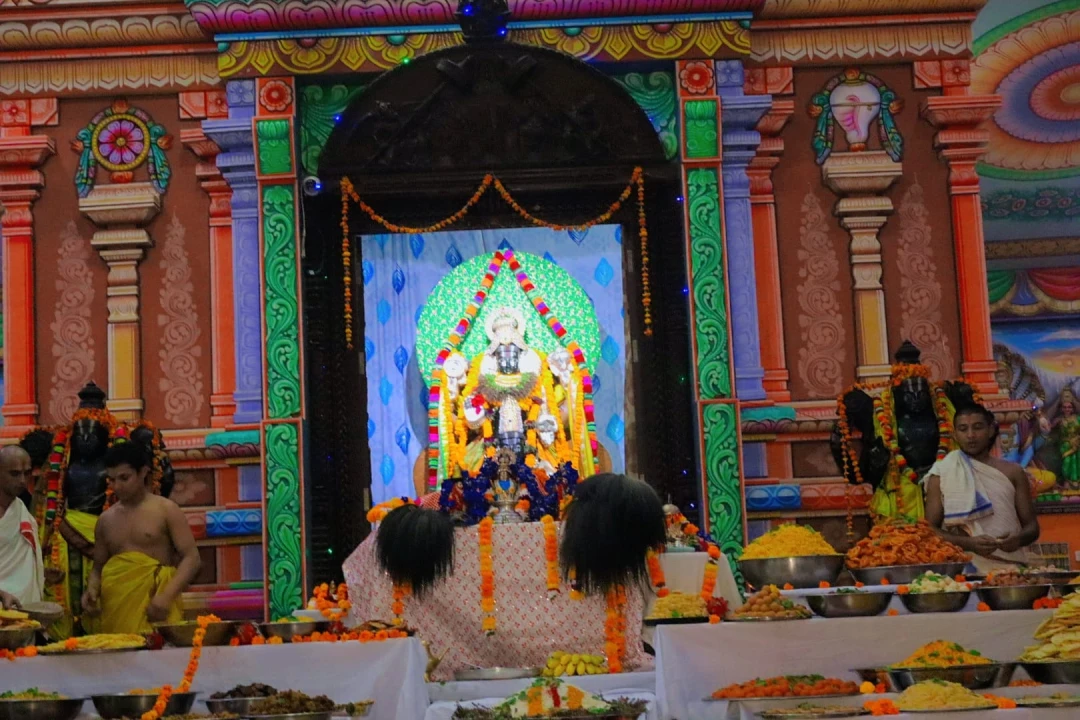
Yagya Kunda

Venerable Srimuktinath Baba, devoted to chanting the name of God, meditation, yoga, yagya, and rituals since his youth, arrived at Shree Gajendramoksha Dham in 2042 BS for the first time. The serene and peaceful environment left a profound impression on him.
After spending some time in this sacred place, he departed for Pulahkhestra Galeshwordham and returned in 2048 BS as per the direction of his Guru (Acharya). Determined to perform a 12-year havan ritual, Baba drew inspiration from Lord Brahma's yagya in Muktikhsetra to provide salvation for all creatures:
Muktiheto kritoyagyo brahmana subhritam para:
According to Hindu scriptures, Lord Vishnu appeared as water, Rudra as fire, and Brahma performed the yagya with offerings of ghee and milk. The fire from Brahma's yagya is believed to reside as a volcano in Muktikshetra.
With divine inspiration, Baba began the havan rituals at Shree Laxminarayan Mandir Akhanda Jyoti Ashram, bringing sacred fire from Muktikshetra. This place, known as the foot of the Lord, became the site for continuous light (Deep).
Significant Events and Discoveries
Occasionally, Baba visited Gajendramokshadivyadham, located 2 kilometers from the Laxminarayan temple, for solitary meditation. On Kartik Harivodhani Ekadashi in 2056, while excavating for the construction of a yagyashala, a crocodile-shaped fragmented rock was unearthed. This rock remains visible in the temple periphery today.
Major Rituals
In the same year, the 48-day Sri Sudarshan Maha Yagya was completed, marking a significant spiritual milestone. In Baishak 2060, Baba conducted 108 Maha Yagyas simultaneously across Nepal. On Magha Amavashya of the same year, the 12-year havan ritual concluded with the Akhandatridhara, which included Madhudhara (honey), Ghritadhara (ghee), and Dugdhadhara (milk).
The Yagya Kund, famous for its association with Vedic mantras such as the Ashtakshari Mahamantra, Gayatrimantra, and Srimantra, continues to be a site for sacred rituals and ceremonies, including marriage vows. People who participate in havan rituals here report spiritual benefits and a sense of peace.
Today, the site remains a center for spiritual growth and cultural preservation.